GST 2.0 Proposal: Small Bikes Under 350cc May Get Cheaper, Bigger Motorcycles Could Face 40% GST
BikeRaja News · 24 February 2026
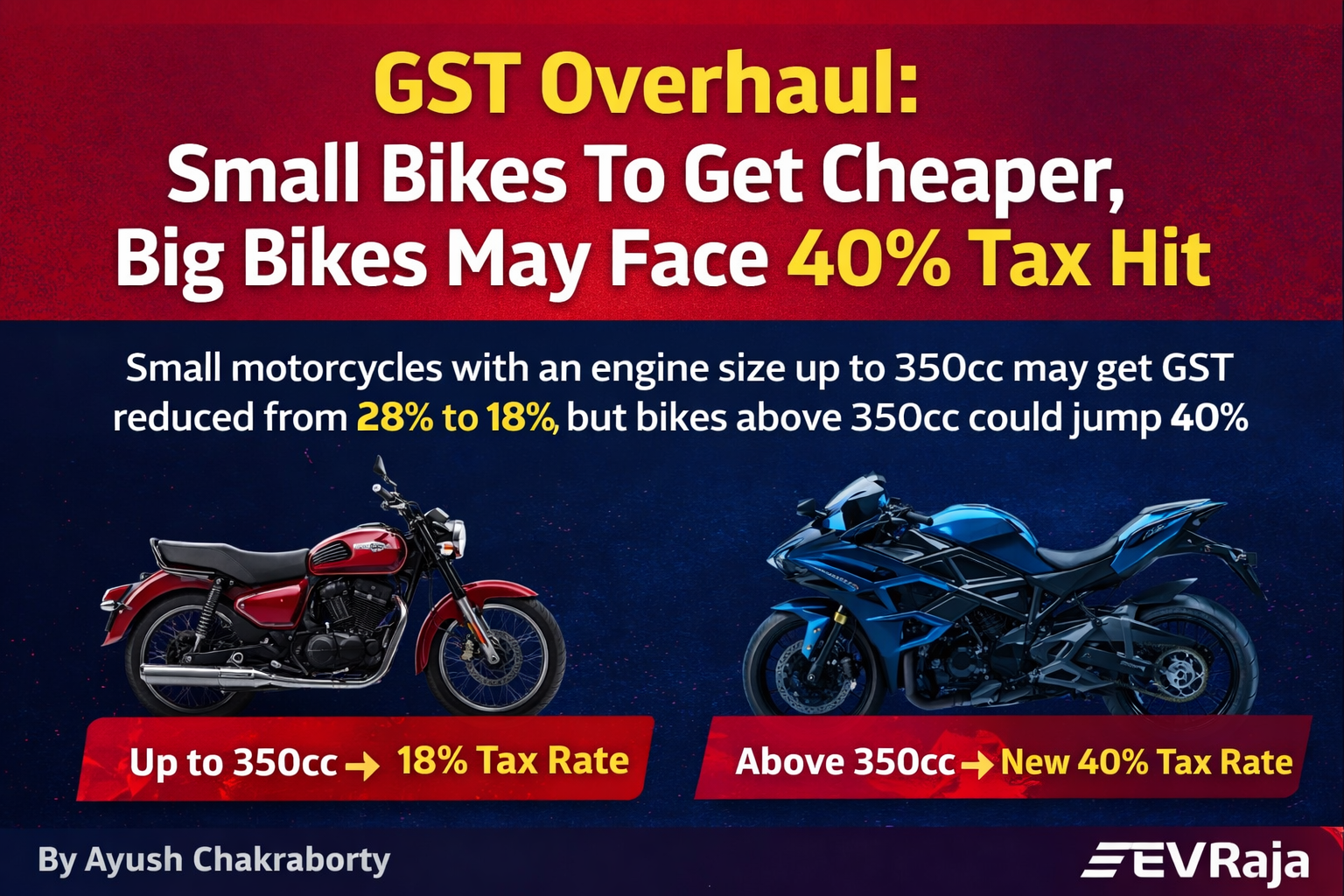
India’s two-wheeler industry could witness a major pricing shift as the government considers a significant overhaul of the Goods and Services Tax (GST) structure. Under the proposed GST 2.0 reforms, motorcycles and scooters with engine capacities up to 350cc may see their tax rate reduced from 28 per cent to 18 per cent. At the same time, bikes above 350cc could move into a higher 40 per cent GST slab, categorising them alongside luxury and sin goods. The proposal is expected to be reviewed in the upcoming GST Council meeting.
Currently, under the GST regime introduced in 2017, two-wheelers fall into the 28 per cent tax bracket, with motorcycles above 350cc also attracting a 3 per cent cess, taking their effective tax rate to 31 per cent. Smaller bikes and scooters are taxed at 28 per cent without any cess. The proposed restructuring aims to simplify the tax system by eliminating the 12 per cent and 28 per cent slabs, retaining 5 per cent for essentials and 18 per cent for standard goods, while introducing a special 40 per cent rate for premium items such as high-capacity motorcycles and luxury cars. If implemented, the GST reduction to 18 per cent for motorcycles under 350cc could significantly lower ex-showroom prices.
Since GST is included in the ex-showroom cost, a 10 per cent reduction in tax could translate into noticeable price cuts for commuter bikes and scooters. This is particularly important because the majority of two-wheeler sales in India come from the 100cc to 350cc segment. Lower prices could boost demand in both urban and rural markets, benefiting entry-level buyers and daily commuters. On the other hand, motorcycles above 350cc could become substantially more expensive if the 40 per cent GST slab is enforced.
Performance bikes, mid-capacity cruisers and premium motorcycles in the 400cc to 650cc range may see a sharp increase in their ex-showroom prices. If manufacturers pass on the additional tax burden to customers, the on-road cost of these bikes could rise considerably, potentially affecting sales volumes in the premium motorcycle segment. The impact of GST 2.0 will vary across manufacturers. Brands with strong portfolios in the sub-350cc category are likely to benefit the most.
Royal Enfield’s popular models such as the Classic 350, Hunter 350 and Meteor 350 fall within the proposed lower tax bracket, potentially making them more affordable. However, larger models like the Interceptor 650 and Continental GT 650 could see price hikes under the 40 per cent slab. Similarly, Honda and Jawa-Yezdi offer motorcycles positioned just below the 350cc threshold, placing them in an advantageous position if the reforms are implemented. Bajaj Auto and its partner brands may face mixed outcomes.
While smaller-capacity motorcycles could benefit from reduced GST, models such as the Pulsar NS400Z and KTM’s 390 range exceed the 350cc limit and could become costlier. Husqvarna’s Vitpilen 250 may see a price reduction, whereas the Svartpilen 401 could witness a significant price increase under the new tax structure. From a strategic perspective, the 350cc cutoff could reshape product development in India’s motorcycle market. Manufacturers may increasingly focus on engineering models just below the 350cc threshold to remain competitively priced.
The move could redefine the mid-capacity motorcycle segment and influence future launches in India. While the GST 2.0 proposal has not yet been finalised, it signals a clear intent to make commuter motorcycles and scooters more affordable while placing higher taxation on larger, premium bikes. If approved, the new GST structure could dramatically alter two-wheeler pricing, boost demand in the entry-level segment, and reposition high-capacity motorcycles as luxury products in the Indian market.