Honda UC3 Design Patented In India: But Will Honda Launch It Here?
Forhad Khan · 1 September 2026
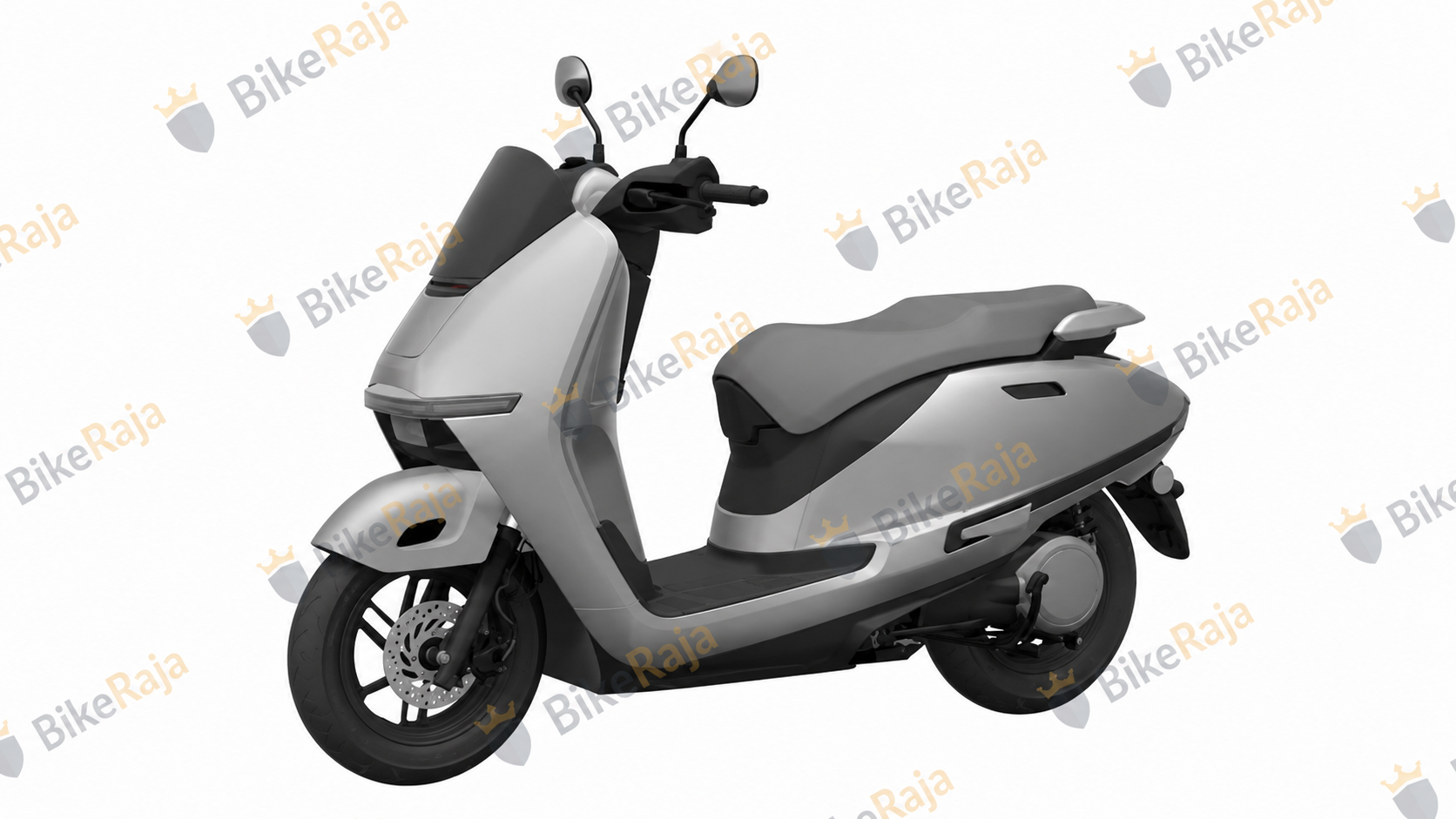
Honda's electric two-wheeler story in India hasn't exactly been a happy one so far. Both of the brand's previous attempts — the Activa e: and the QC1 — were quietly discontinued after failing to find buyers, leaving Honda as, frankly, the only major mainstream two-wheeler brand in the country without a genuine presence in the electric segment. So when a company files a design patent for another electric scooter here, it's the kind of thing that understandably gets people's attention. This time, it's the UC3, a scooter that's already on sale in Thailand and Vietnam, and it's arrived on India's patent registry just weeks after Honda separately unveiled the QC3 for the domestic market.
What's Actually Been Filed
Honda has filed a design patent for the UC3 in India. That's it — that's the concrete, verifiable fact at the centre of this story. Everything beyond that, including whether the scooter will ever actually go on sale here, is speculation, and it's worth being upfront about that distinction before getting into what the UC3 actually is.
What the UC3 Actually Is
Strip away the will-it-won't-it question for a moment, and the UC3 itself is a genuinely interesting scooter on its own merits. It's already on sale in Thailand, where it carries a sticker price of THB 142,600 — roughly ₹4.10 lakh at current exchange rates, though that comes down to around THB 132,600 (about ₹3.82 lakh) once local subsidies are factored in. In Vietnam, Honda is currently bringing it in via CBU (completely built unit) imports, though CKD assembly — building it locally from imported kits — is reportedly expected to begin there before long.
Design-wise, it's a bit of an unusual mix. Look at it from the front and it reads like a maxi-scooter; look at it from the side, with its seat shape and body panel lines, and it leans distinctly neo-retro, almost cruiser-like. It's not a look Honda currently sells anywhere in its Indian lineup, which is part of what makes the patent filing notable — this isn't just a rebadge of something already familiar to Indian buyers.
The Real Headline: It's Honda's First LFP Scooter
If there's one detail in this story that matters more than the styling, it's the battery chemistry. The UC3 is the first Honda electric scooter to use an LFP (Lithium Iron Phosphate) battery pack — a genuine first for the brand. Every other Honda EV so far, including the QC1 and the Activa e:, has used Li-ion NMC (Nickel Manganese Cobalt) chemistry instead. LFP batteries generally trade a bit of energy density for better longevity and thermal stability, which is precisely why so many manufacturers globally have been shifting toward them for mainstream, everyday-use vehicles rather than performance-focused ones.
There's also a more practical difference worth flagging: unlike the Activa e:, which uses a swappable battery pack, the UC3 runs on a fixed battery that stays in the scooter and charges in place. That's a meaningfully different ownership experience, and it's one reason the UC3 reads more like a separate ground-up project for Honda than simply a rebadged version of something it already sells.
Specifications
| Specification | Detail |
|---|---|
| Battery | 3.2 kWh LFP (Lithium Iron Phosphate), fixed pack |
| Peak Motor Output | 6 kW (approx. 8 bhp) |
| Claimed Range | 122 km per charge |
| Top Speed | 80 km/h (claimed) |
| Charging Time (20-80%) | 5 hours (450W charger) / 2 hours (1200W charger) |
| Wheels | 12-inch front and rear |
| Instrument Cluster | 5-inch TFT with Honda RoadSync connectivity |
| Underseat Storage | 26 litres |
| Riding Modes | Econ, Standard, Sport |
| Current Markets | Thailand, Vietnam |
Feature Highlights
Beyond the battery story, the UC3 comes reasonably well-equipped for the segment it plays in overseas. It gets bi-chromatic (bi-colour) LED headlights positioned below a three-piece LED DRL setup that doubles up as turn indicators, along with traction control, a reverse assist function, and adaptive regeneration — where the scooter automatically adjusts how much regenerative braking it applies based on the current battery state. Honda is also positioning the UC3's real-world performance as roughly equivalent to a 160cc petrol scooter, which — if that claim holds up in independent testing — would put it in a fairly punchy performance bracket for an electric scooter at this size.
The Bigger Pattern: Honda Has Been Patenting a Lot Lately
The UC3 isn't happening in isolation. Honda has, over an extended period, filed a fairly wide spread of EV-related design patents in India — not just for complete vehicles, but for battery packs, chargers, motors, and cooling systems too. Some of these filings have even shown design drawings resembling other global Honda products, including electric scooters styled like the PCX Electric and, in one case, a design resembling an electric version of the CB300R motorcycle. Most of these patents are filed by Honda Motor Co. Ltd. or Honda R&D Co. Ltd. directly — the global parent entities — rather than by Honda Motorcycle & Scooter India, the local subsidiary, which itself is a small but telling detail about how these decisions are being made from the top down rather than locally.
Put together, it paints a picture of a company that's clearly investing heavily in electric two-wheeler development at a global level and is being careful to protect that intellectual property everywhere it might eventually matter — India very much included, given its size. But investing in patents is a fundamentally different commitment from investing in a production line, and Honda has been careful, so far, not to conflate the two.
Where This Leaves the QC3
It's worth remembering that the UC3 patent filing arrives shortly after Honda separately confirmed the QC3 for India, with a fixed 3kWh battery pack and a claimed range of 145km — a scooter Honda has explicitly said it will launch here soon. That's the more concrete near-term story for Honda in India's EV space right now. The UC3, by contrast, remains firmly in "patented, not promised" territory, and the two shouldn't be confused with each other despite arriving in the news cycle so close together.
How the UC3 Would Stack Up If It Ever Arrived
It's also worth noting that Honda's rivals aren't waiting around. Bajaj, TVS, and Hero currently sit among the top electric two-wheeler brands in India by volume, and Honda's fellow Japanese manufacturers, Yamaha and Suzuki, already have a reasonably established presence here too, with the EC-06 and e-Access respectively. Every quarter Honda spends deciding whether to bring something like the UC3 to India is a quarter its rivals spend further cementing their position in a segment Honda has, so far, twice failed to crack.
The Bottom Line
So, will Honda launch the UC3 in India? Honestly, nobody outside Honda knows for certain right now, and anyone claiming otherwise is guessing. What we do know is that Honda has filed a design patent for it, that the scooter itself brings a genuinely new battery chemistry to the brand's electric lineup, and that this fits a much broader pattern of Honda protecting its EV intellectual property in India well ahead of any confirmed local plans. Given the company's track record here — two discontinued EVs in a row — some healthy scepticism feels warranted. But given how aggressively Honda has been filing EV-related patents recently, and how badly it needs a genuine EV win in the world's largest two-wheeler market, it wouldn't be a total surprise if the UC3, or something clearly derived from it, eventually finds its way to an Indian showroom. For now, though, this is a patent story, not a launch story — and it's worth treating it that way.
Autocar India · RushLane · BikeAdvice · EVSHIFT · Technosports · Ourcarzone