India’s Sports Bike Segment Accelerates in 2026: New Launches, Rising Demand, and a Shift Toward Performance Motorcycling
BikeRaja News · 21 April 2026
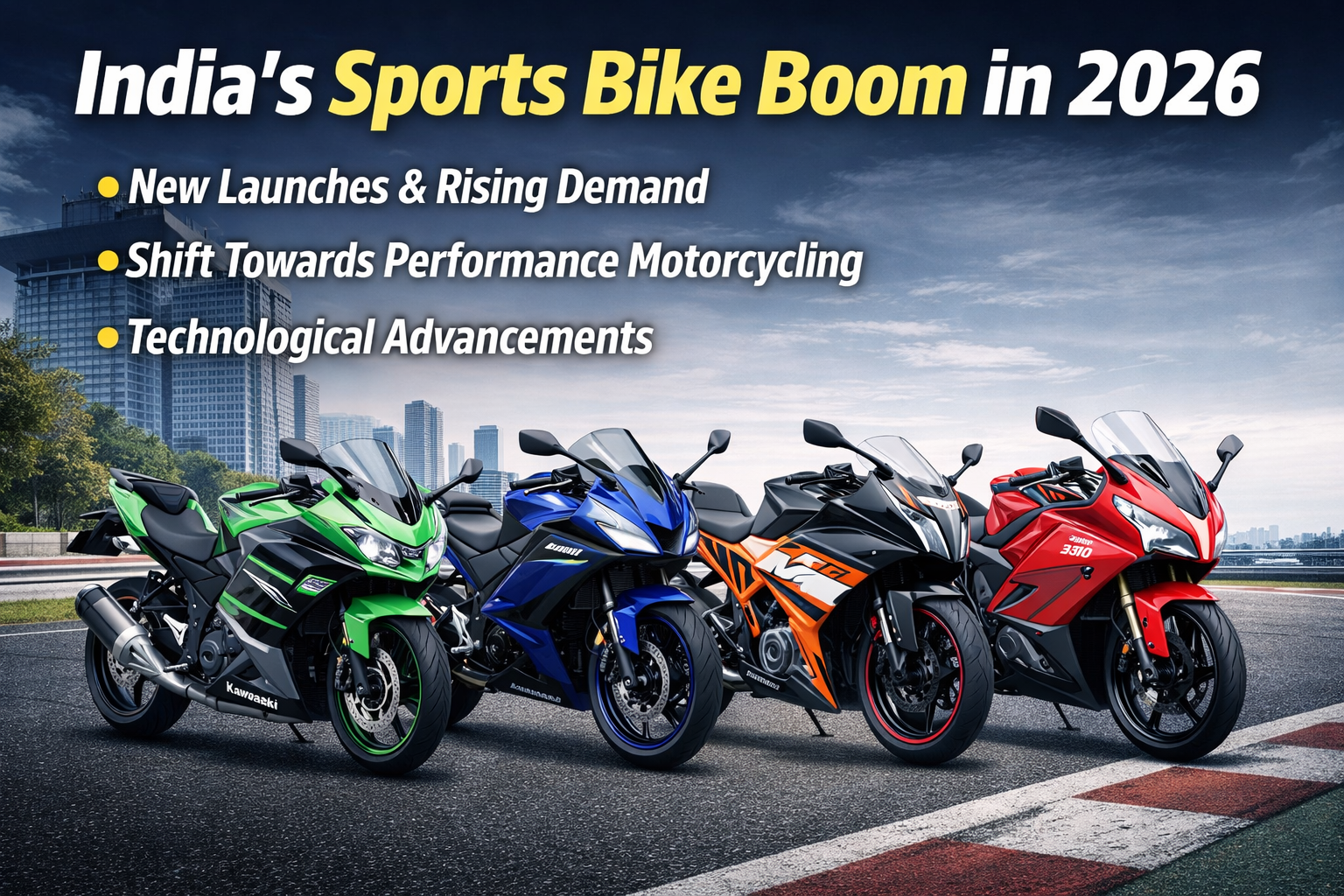
India’s sports bike market is witnessing rapid growth in 2026, driven by increasing demand for performance motorcycles, new launches from major brands, and evolving rider preferences. Companies like Kawasaki, Yamaha Motor Company, KTM, and TVS Motor Company are expanding their portfolios with powerful yet accessible bikes. With better road infrastructure, growing disposable income, and a strong youth interest in racing culture, the sports bike segment is emerging as one of the fastest-growing categories in India’s two-wheeler market. India’s Sports Bike Boom in 2026: A New Era of Performance and Passion The Indian motorcycle industry is undergoing a major transformation in 2026, with the sports bike segment witnessing unprecedented growth.
Once considered a niche category limited to enthusiasts and premium buyers, sports bikes are now becoming more mainstream, thanks to aggressive pricing, improved accessibility, and increasing awareness among young riders. Manufacturers across the globe are focusing heavily on India as a key market for performance motorcycles. From entry-level sports bikes to high-performance superbikes, the segment is expanding rapidly, offering a wide range of options to suit different budgets and riding needs. Rising Demand for Sports Bikes in India The demand for sports bikes in India has grown significantly over the past few years.
Several factors have contributed to this rise, including improved road infrastructure, higher disposable incomes, and a growing interest in motorcycling culture. Young riders, particularly in urban areas, are now more inclined toward performance-oriented motorcycles that offer speed, style, and advanced technology. Social media and motorsport events have also played a major role in popularizing sports bikes among the younger generation. Another key factor driving demand is the availability of financing options, which has made premium motorcycles more accessible to middle-class buyers.
Easy EMIs and attractive loan schemes have allowed many riders to upgrade from commuter bikes to sports bikes. Key Launches Shaping the Market In 2026, several major launches have captured attention in the sports bike segment. Brands are introducing new models with improved performance, better safety features, and modern design elements. Kawasaki Expands Its Lineup Kawasaki continues to dominate the premium sports bike segment with its latest offerings.
The company has introduced updated versions of its popular Ninja series, including enhancements in engine performance, aerodynamics, and rider assistance systems. The new models feature advanced electronics such as traction control, riding modes, and quick shifters, making them more appealing to performance enthusiasts. Yamaha Focuses on Balanced Performance Yamaha Motor Company has strengthened its presence in the mid-range sports bike segment with updated versions of its R-series motorcycles. These bikes are known for their balance between performance and practicality, making them suitable for both city riding and highway cruising.
Yamaha’s focus on lightweight design and refined engines has helped it maintain a strong position in the market. KTM Targets Young Riders KTM continues to attract young riders with its aggressive styling and high-performance machines. The company has introduced new variants in its RC and Duke series, featuring improved power delivery and enhanced safety features. KTM’s strategy of offering high-performance bikes at competitive prices has been a key factor in its success in India.
TVS Enters the Performance Arena TVS Motor Company is also making significant strides in the sports bike segment. Building on the success of its Apache series, the company is focusing on performance-oriented motorcycles that combine racing DNA with everyday usability. TVS’s collaboration with international brands and its experience in motorsports have helped it develop competitive products in this segment. Technology Driving the Evolution Modern sports bikes are no longer just about speed; they are also about technology and safety.
Manufacturers are integrating advanced features that enhance both performance and rider experience. Some of the key technological advancements include: * Ride-by-wire throttle systems for precise control * Multiple riding modes for different conditions * Traction control systems to prevent wheel slip * Quick shifters for seamless gear changes * ABS and cornering ABS for improved braking safety These features were once limited to high-end superbikes but are now becoming standard in mid-range sports bikes as well. Shift Toward Entry-Level Performance Bikes One of the most significant trends in 2026 is the rise of entry-level sports bikes. Manufacturers are focusing on bikes in the 150cc to 400cc segment, which offer a good balance between performance and affordability.
These bikes serve as an entry point for new riders who want to experience sports biking without spending a fortune. They are also more practical for daily use compared to high-capacity superbikes. This shift has opened up the sports bike market to a much wider audience, contributing to its rapid growth. Role of Motorsport and Riding Culture Motorsport events and racing culture have played a crucial role in boosting the popularity of sports bikes in India.
Track days, racing leagues, and biking communities have encouraged more riders to explore performance motorcycling. Brands are also investing in racing programs and rider training initiatives to promote their products and build a strong community around their motorcycles. The influence of motorsports is evident in the design and technology of modern sports bikes, many of which are inspired by racing machines. Challenges in the Sports Bike Segment Despite its growth, the sports bike segment faces several challenges.
High maintenance costs, expensive spare parts, and limited service networks for premium brands can be a concern for buyers. Additionally, traffic conditions in major cities can limit the usability of high-performance bikes. Sports bikes are often better suited for highways and open roads, which may not always be accessible to all riders. Fuel efficiency is another factor that some buyers consider, especially when comparing sports bikes with commuter motorcycles.
The future of the sports bike segment in India looks promising. With continuous innovation, increasing competition, and a growing customer base, the market is expected to expand further in the coming years. Electric sports bikes are also beginning to emerge, indicating a potential shift toward sustainable performance motorcycling. As technology advances, we may see electric bikes delivering performance comparable to traditional petrol-powered sports bikes.
Manufacturers are likely to focus on: * More affordable performance bikes * Advanced safety technologies * Improved fuel efficiency * Expansion of service networks --- ## Conclusion The sports bike segment in India is no longer limited to a niche audience. It has evolved into a dynamic and rapidly growing market driven by innovation, competition, and changing consumer preferences. With major players like Kawasaki, Yamaha Motor Company, KTM, and TVS Motor Company leading the charge, the future of performance motorcycling in India looks more exciting than ever. As more riders embrace the thrill of speed and the appeal of advanced technology, sports bikes are set to become a defining part of India’s two-wheeler landscape in the years ahead.