Urban Motorcycling Boom: City Bikes, Café Racers and Superbikes Drive a New Motorcycle Culture in 2026
BikeRaja News · 6 March 2026
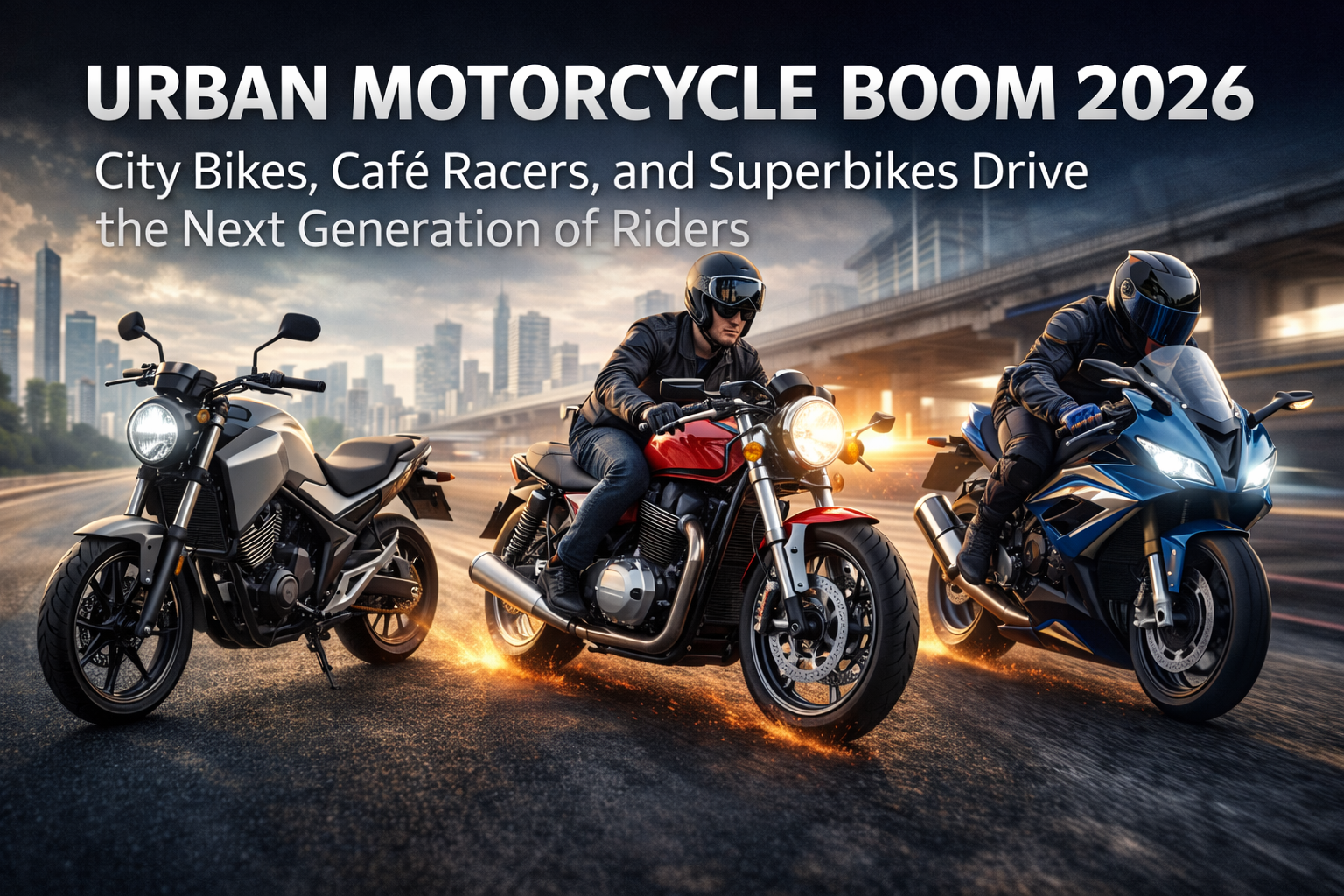
The global motorcycle industry is witnessing a major shift in 2026 as three distinct segments—city bikes, café racers, and superbikes—are gaining rapid popularity among riders. Changing urban lifestyles, improved motorcycle technology, and the growing influence of motorcycle culture on social media are pushing manufacturers to launch more stylish, powerful, and efficient models in these categories. From compact city commuters designed for daily urban travel to high-performance superbikes built for speed enthusiasts, the motorcycle market is entering a new era of diversity and innovation. City bikes are becoming increasingly popular in crowded urban environments where efficiency, maneuverability, and affordability are key priorities for riders.
With cities becoming more congested, lightweight motorcycles with smaller engines are proving to be the most practical solution for daily commuting. Many manufacturers are introducing advanced fuel-efficient engines, hybrid powertrains, and even electric city bikes designed specifically for short-distance urban travel. Features such as smartphone connectivity, navigation systems, and improved safety technologies are now being integrated even into entry-level motorcycles, making them more appealing to younger riders and first-time buyers. At the same time, the café racer segment is experiencing a strong revival as riders seek motorcycles that combine vintage aesthetics with modern performance.
Café racers, inspired by the custom motorcycles of the 1960s, are known for their minimalist design, low handlebars, and aggressive riding posture. Major manufacturers are capitalizing on this trend by launching factory-built café racer models that deliver both classic styling and contemporary engineering. Riders are increasingly drawn to these motorcycles not only for their distinctive look but also for the sense of individuality and motorcycle culture they represent. Many café racer owners also customize their bikes with unique paint schemes, exhaust systems, and performance upgrades.
Meanwhile, the superbike category continues to push the limits of motorcycle performance and engineering. Modern superbikes now feature advanced technologies such as traction control systems, adaptive suspension, aerodynamic winglets, and sophisticated electronics derived from racing motorcycles. These machines are capable of producing extraordinary power while maintaining precise handling and stability at high speeds. Leading motorcycle manufacturers are competing fiercely to develop the next generation of superbikes, incorporating lightweight materials, improved aerodynamics, and more efficient engines.
Another factor driving the growth of these segments is the rising popularity of motorcycle communities and riding groups around the world. Social media platforms and online forums have created large global communities of riders who share experiences, organize group rides, and showcase their motorcycles. This cultural movement has encouraged more people to explore motorcycling not only as a mode of transportation but also as a lifestyle and passion. Environmental awareness is also shaping the future of motorcycles.
Many companies are investing in electric motorcycles that can serve both urban commuting and high-performance riding. Electric city bikes are already appearing in several markets, while manufacturers are also experimenting with electric superbikes capable of delivering impressive acceleration and zero-emission performance. These developments could redefine the motorcycle industry over the next decade. Industry experts believe that the combination of modern technology, nostalgic design trends, and evolving urban mobility needs will continue to fuel demand for city bikes, café racers, and superbikes.
As manufacturers introduce more innovative models and riders embrace motorcycle culture, the global two-wheeler market is expected to expand rapidly in the coming years. With a new generation of riders entering the market and manufacturers constantly pushing the boundaries of design and engineering, motorcycles are no longer just machines for transportation—they are becoming symbols of freedom, performance, and personal identity. The growing popularity of city bikes, café racers, and superbikes shows that the passion for two-wheeled mobility is stronger than ever.