Yamaha EC-06 Electric Scooter Gets Slow Start in India: Only 92 Units Dispatched in First Month of Sales
BikeRaja News · 18 March 2026
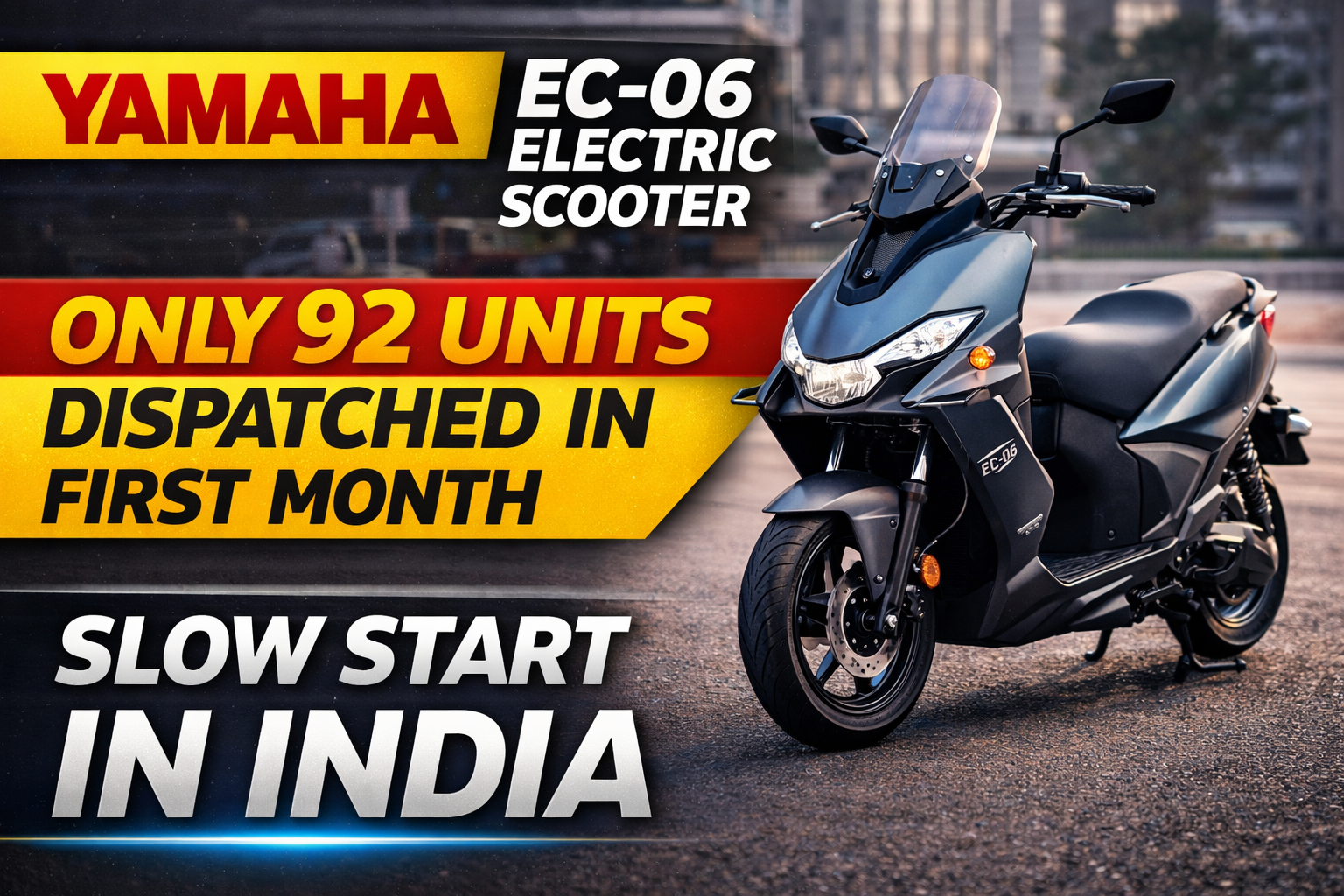
India Yamaha Motor has officially begun its electric journey in the country, but the early numbers suggest a cautious and slow start. The company dispatched just 92 units of its newly launched EC-06 electric scooter in February 2026, which marks its first month of sales in the Indian market. While this may seem modest, the figure reflects Yamaha’s premium positioning strategy and limited rollout approach rather than a lack of interest in electric mobility. The EC-06 is Yamaha’s first electric two-wheeler in India and represents a significant shift for the Japanese manufacturer, which has traditionally focused on petrol-powered scooters and motorcycles.
The brand’s entry into the EV space comes at a time when India’s electric two-wheeler market is witnessing rapid growth, driven by government incentives, rising fuel prices, and increasing consumer awareness. However, Yamaha’s initial performance also highlights the challenges faced by global legacy manufacturers entering a market already dominated by strong domestic players. A Strategic but Slow Entry Into India’s EV Market: Yamaha’s electric debut in India has been carefully planned rather than aggressive. The EC-06 was first unveiled in late 2025 and went into production in January 2026 at River Mobility’s manufacturing facility in Hoskote, Karnataka.
The scooter was officially launched on February 2, 2026, at a price of around ₹1.67 lakh (ex-showroom, Delhi). Unlike mass-market electric scooters that aim for high volumes, the EC-06 has been introduced as a premium urban mobility solution. It is currently available only in select cities across Karnataka, Tamil Nadu, and Maharashtra, and is sold through Yamaha’s Blue Square dealerships, which are designed for premium customer experiences. This limited availability is one of the primary reasons behind the low dispatch numbers.
Yamaha appears to be testing the market response before expanding its distribution network across India. Partnership With River Mobility: A Key Move: One of the most interesting aspects of the EC-06 is its development. The scooter is based on the River Indie electric scooter, a product developed by Bengaluru-based startup River Mobility. Yamaha has taken a collaborative approach by partnering with River, in which it had invested earlier.
The EC-06 is essentially a joint development project, with Yamaha handling product ownership while River takes care of engineering, battery integration, and manufacturing. This partnership allows Yamaha to enter the EV market faster without building an entirely new platform from scratch. It also helps the company leverage local expertise in India’s electric vehicle ecosystem. However, the EC-06 is not identical to the River Indie.
Yamaha has made several changes in terms of design, features, and tuning to align the product with its brand identity. Price Positioning: Premium Strategy Limits Volume: One of the biggest factors affecting the initial sales performance of the EC-06 is its pricing. The scooter is priced at around ₹1.67 lakh (ex-showroom), making it significantly more expensive than the River Indie, which costs about ₹1.46 lakh. This price difference of over ₹20,000 places the EC-06 firmly in the premium segment.
While Yamaha is known for offering high-quality products, Indian EV buyers are still highly price-sensitive, especially in the two-wheeler category. When compared to competitors like TVS, Bajaj, and Ather, the EC-06 appears relatively expensive. Many of these brands offer electric scooters with similar or better features at lower prices, which makes it difficult for Yamaha to compete on volume in the early stages. Performance and Specifications: Despite its slow start in sales, the Yamaha EC-06 is a well-engineered electric scooter with strong specifications designed for urban commuting.
The scooter is powered by a 4kWh lithium-ion battery paired with an electric motor producing 6.7kW of peak power and 26Nm of torque. Key performance figures include: * Top speed: 79 km/h * Range: 169 km on a single charge * Charging time: Approximately 8–10 hours * Motor type: IPMSM (Interior Permanent Magnet Synchronous Motor) These specifications make the EC-06 suitable for daily urban commuting rather than high-performance riding. Yamaha has clearly focused on practicality and efficiency rather than outright speed. The scooter also comes with three riding modes – Eco, Standard, and Power, allowing riders to balance performance and range depending on their needs.
Features and Technology: The Yamaha EC-06 is equipped with several modern features aimed at enhancing convenience and connectivity. Some of the key features include: * Full LED lighting system * Digital LCD instrument cluster * Smartphone connectivity via Yamaha Motor Connect app * Reverse mode for easy parking * Disc brakes at both ends with CBS * 24.5-litre under-seat storage While the scooter offers a decent set of features, it lacks some premium elements such as a TFT display or advanced navigation, which are becoming increasingly common in this price segment. Comparison With River Indie: Since the EC-06 is based on the River Indie, comparisons between the two are inevitable. Both scooters share the same platform, battery, and motor specifications.
However, there are some key differences: * The EC-06 has a slightly lower top speed (79 km/h vs 90 km/h) * It offers a slightly higher range (169 km vs 163 km) * It has significantly smaller under-seat storage (24.5L vs 43L) Despite these differences, the biggest distinction remains the price. The River Indie offers better practicality at a lower cost, which is why it recorded much higher sales compared to the EC-06. In February 2026, River delivered over 2,300 units of the Indie, far surpassing Yamaha’s 92 units. Japanese Brands Lag Behind Indian EV Leaders Yamaha is not alone in facing challenges in India’s electric two-wheeler market.
Other Japanese manufacturers such as Honda and Suzuki are also struggling to gain traction. In February 2026, the combined sales of Yamaha, Honda, and Suzuki electric scooters stood at just 824 units, which is extremely low compared to Indian manufacturers. In contrast, Indian companies like TVS, Bajaj, and Hero MotoCorp collectively sold over 80,000 electric two-wheelers during the same period. This massive gap highlights the dominance of domestic players in the EV segment.
Indian brands have been quicker to adapt, offering competitively priced products tailored to local needs. Why Sales Are Currently Low: There are several reasons why Yamaha’s EC-06 has recorded low dispatch numbers in its first month: 1. Limited Availability The scooter is currently sold only in select cities, which restricts its reach. 2. Premium Pricing The EC-06 is significantly more expensive than many competitors. 3.
Late Entry Yamaha entered the EV market much later than Indian brands. 4. Strong Competition Established EV players already dominate the market with proven products. Cautious Strategy: Yamaha is likely testing the market before scaling production and sales. Yamaha’s Long-Term EV Strategy: Despite the slow start, Yamaha’s entry into the electric two-wheeler market is a long-term strategic move.
The company aims to establish a strong presence in India’s EV ecosystem by: * Partnering with local startups like River Mobility * Investing in local manufacturing * Expanding its premium dealership network * Introducing more electric models in the future The EC-06 is just the beginning of Yamaha’s electric journey in India. The company is expected to launch additional models in different price segments to compete more effectively. Future Outlook: Can Sales Improve? While the initial dispatch numbers are low, they do not necessarily indicate long-term failure.
Several factors could help improve sales in the coming months: * Expansion to more cities * Increased awareness of the product * Possible price adjustments or offers * Growth in EV infrastructure * Rising fuel prices boosting EV demand If Yamaha expands its reach and adapts its pricing strategy, the EC-06 could see better adoption in the future. The dispatch of just 92 units of the Yamaha EC-06 in its first month of sales highlights the challenges faced by premium electric scooters in India. While the product itself is well-engineered and offers good performance for urban commuting, its high price and limited availability have restricted its initial success. However, Yamaha’s cautious approach should not be mistaken for a lack of ambition.
The company is clearly taking a long-term view of the Indian EV market, focusing on building a strong foundation rather than chasing immediate volumes. As the electric two-wheeler market continues to evolve, Yamaha’s strategy may pay off in the coming years. For now, the EC-06 represents a premium entry point into India’s EV space—one that prioritizes quality and brand value over mass-market appeal.